
Reimagining PGA.com
A ground-up redesign of PGA.com that connected golfers with coaches through personalization, data, and a content platform built to grow the game.
Results
- Redesigned PGA.com from the ground up with personalized player-coach matching
- Conducted 30+ hours of player and coach interviews across 24 players and 12 coaches
- Architected a decoupled platform on Drupal 8, Acquia, and IBM Watson
Context
The PGA of America came to us with a fundamental growth problem. Golf participation appeared stagnant, but the data told a more nuanced story: 15 million non-golfers expressed high interest in playing each year, representing a potential $3 billion in industry revenue if even 10 percent converted. Americans wanted to play golf -- until they tried it. The gap between interest and retention was where the PGA was losing the game.
PGA.com was positioned to be the bridge, but the existing site was essentially a directory. Coach profiles read like phone book listings. Content was generic. There was no personalization, no data-driven matching, and no pathway that connected a curious beginner with the right instructor for their level and goals.
Challenge
We needed to build a platform that served two very different audiences simultaneously. For players, the experience needed to inspire improvement at every level -- from first-timers to competitive amateurs. For coaches, the platform needed to elevate their personal brands, reduce administrative friction, and help them build sustainable businesses.
Through 30 hours of interviews across 24 players and 12 coaches, combined with visits to five facilities, we uncovered the core insight: for every player, at every level, learning golf is the key to loving golf. Success -- whether a first par, a sub-100 round, or a long putt rolling in -- is what keeps people coming back. The platform needed to make those moments of success more frequent and more accessible.
Approach
We organized the redesign around four design imperatives: elevate the instructor, personalize through data, connect players and instructors, and get players on the course.
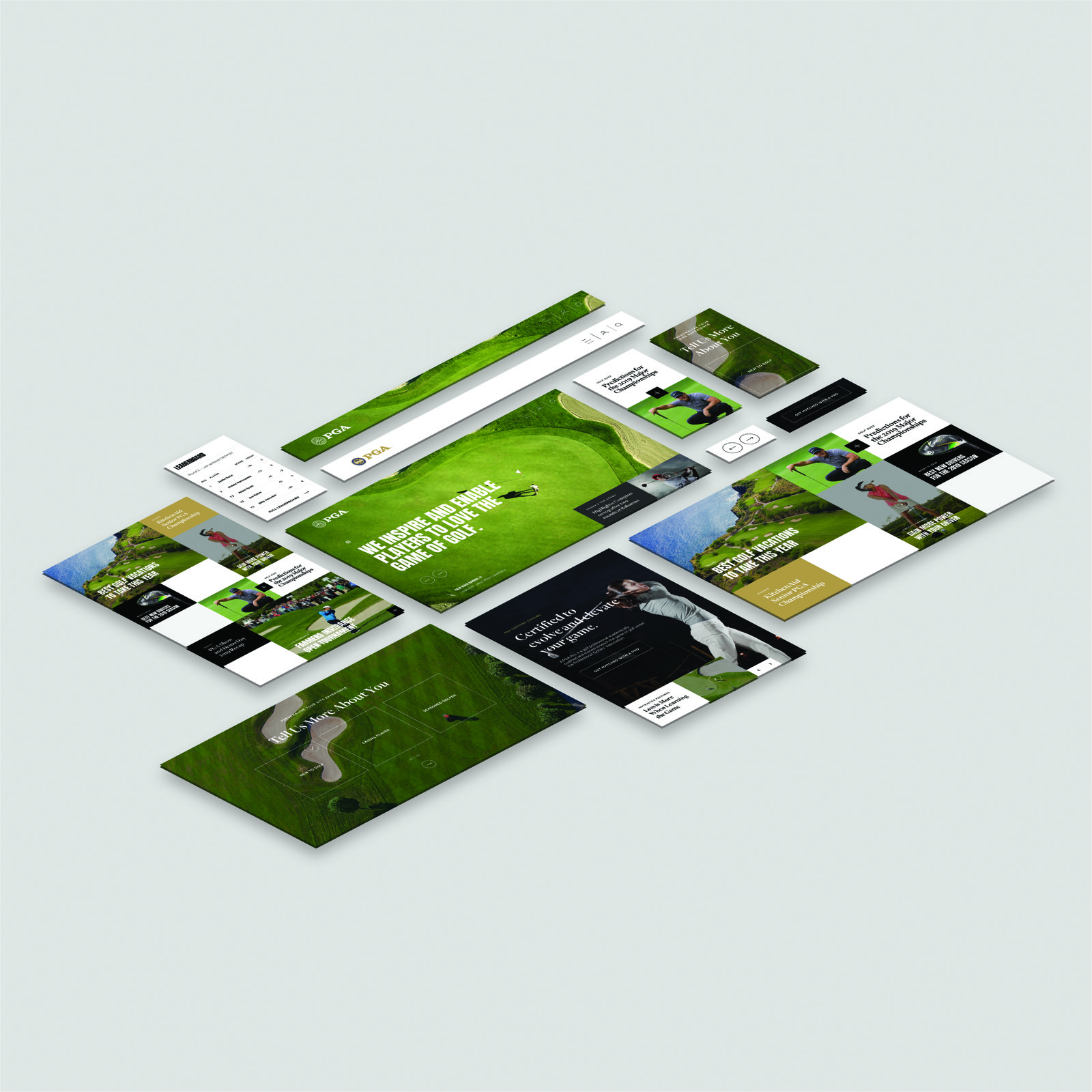
Elevating instructors meant transforming flat directory listings into rich profiles that showcased each coach's personality, teaching philosophy, specialties, and student success stories. We built an instructor dashboard where coaches could prepare for upcoming lessons with student briefs and document session details afterward -- turning the platform into a genuine business tool.

Personalization and data powered intelligent matching between players and coaches. Using IBM Watson, the platform analyzed player goals, experience level, location, and learning preferences to recommend instructors who were genuinely the right fit -- not just the nearest option. After lessons, data from session entries fed back into the system to strengthen the coach-player connection over time.
Connecting players and instructors extended beyond simple matching. We designed content experiences that let players explore topics they wanted to improve on, with tagged content packages that led naturally to instructor engagement. Key moments in the journey -- explore, engage, foster -- each had specific design patterns optimized for conversion.
The technical architecture was built for scale and flexibility: a decoupled Drupal 8 platform on Acquia with content syndication across web, mobile, email, and SMS. The system was contextual, channel-agnostic, and data-driven -- designed to learn from every interaction and improve recommendations over time.
Results
The redesigned PGA.com transformed from a static directory into a dynamic marketplace for golf instruction. The platform gave coaches tools to build personal brands and manage their businesses digitally, while giving players a personalized pathway from curiosity to commitment.
The phased launch approach -- discovery and research through soft launch over five phases -- allowed the PGA to validate each piece of the experience before scaling. The modular content system and flexible architecture meant the platform could evolve with the sport, extending instruction to new spaces and formats as golf continued to reach new audiences.
Your best golf is ahead of you. That was not just a tagline -- it was the design principle that informed every decision.
Ready to discuss your project?
We would love to hear about what you are working on.
Let's Talk